Table of Contents
ToggleWe usually think of fire as something that happens to someone else, but the risks at home are actually there every day. A solid Residential Fire Sprinkler Design flips that script immediately. It sits there quietly until it’s needed, then reacts in a split second. Modern houses need safety tech that doesn’t ruin the aesthetic, and finding that balance is more important now than it’s ever been.
Today’s homes are full of synthetic materials and tight layouts that let fire move way faster than you’d think. This is why a proper residential fire sprinkler design system is important; it’s built to jump on the flames fast and put them out effectively. It also reduces damage and protects lives efficiently.
Fire codes are always shifting, no matter where you live, but a lot of buildings are still behind the curve. A smart, structured home fire protection system design makes sure you’re legal and gives you real peace of mind. This guide walks you through the basics of layouts, pricing, and the best strategies to use. Every section delivers practical clarity for smarter decisions.
Understanding Residential Fire Sprinkler System Design
Residential Fire Sprinkler Design focuses on controlling fire at its origin. The system kicks in on its own the second the heat hits a specific point. It’s a simple mechanical reaction that stops a fire from getting out of control.
We stick to strict rules like BS 9251 sprinkler system design or NFPA 13D sprinkler system design to get it right. These codes tell us exactly how much water and pressure we need for full coverage. Following them is the only way to know the system will actually work when it counts.
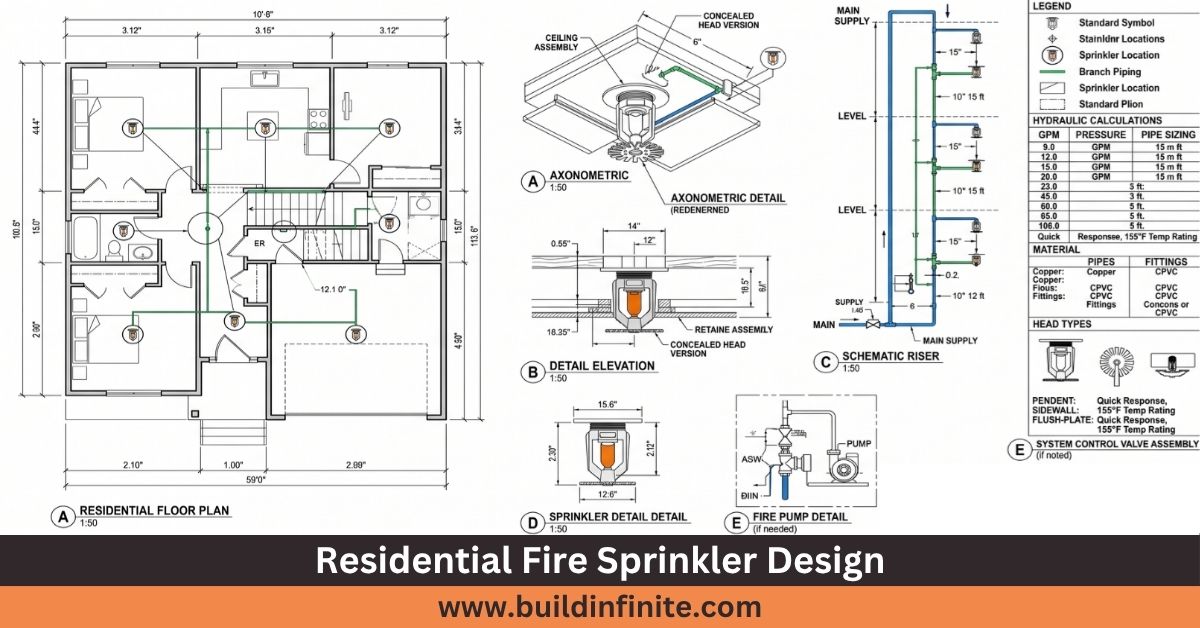
The actual fire sprinkler layout for homes depends entirely on the size and shape of the rooms. Every area needs its own specific plan. Getting the sprinkler head placement residential right is the only way to cover the whole floor; if you miss a spot, you’re just increasing the risk for no reason.
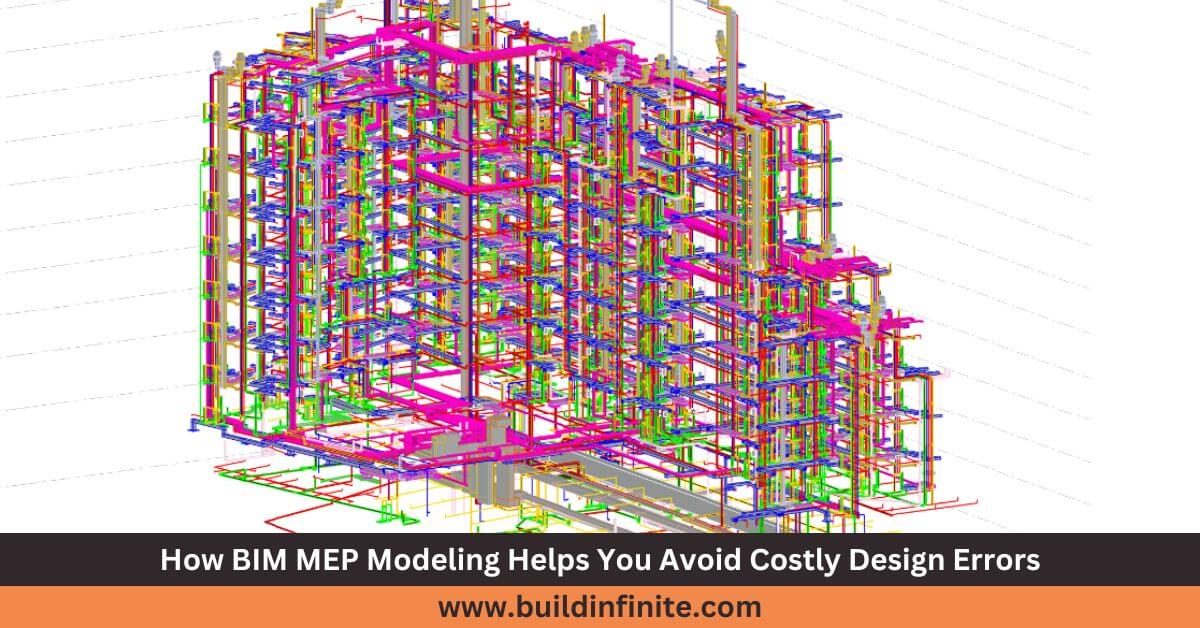
Good fire protection engineering for homes has to look at the whole water setup—the tanks, the pumps, and the pipes all have to be in sync. That’s how you get a system that reacts instantly. Using CAD and BIM fire sprinkler design for residential buildings has made everything much more accurate. These digital tools let us see the layout and fix errors before we even touch the site, which is why everyone uses them now.
Fire Sprinkler Layout and Design Planning Essentials
A reliable Residential Fire Sprinkler Design begins with a dead-accurate layout. You can’t have any gaps in the coverage. We have to look at how high the ceilings are, the room dimensions, and what the space is actually being used for.
The sprinkler head placement in residential areas is a make-or-break detail. If the spacing is off, the system won’t work right. You need them positioned so the water hits every square inch of the room evenly.
Creating fire sprinkler CAD drawings residential is the best way to see how a complex plan will actually look. These drawings are a roadmap for the installers, and they stop you from having to do expensive re-work later. Using BIM for fire sprinkler systems makes the whole process even smoother, as it helps the engineers and architects stay on the exact same page. As a result, clashes between systems get resolved early.
Fire suppression system design for homes must also consider water pressure. Low pressure affects performance significantly. Therefore, pressure calculations remain essential during planning.
Codes, Standards, and Residential Fire Safety Compliance
Local fire safety regulations for homes can change depending on where you are, but NFPA 13D requirements residential use are pretty much the gold standard. These rules set the bar for how we design and put the systems in.
Hitting your residential fire code compliance is the only way to get your legal sign-offs and know you’re safe. Most inspectors won’t even let you move in until they see you’ve followed the rules to the letter.
The building code fire sprinkler requirements tell us exactly how much of the house needs to be covered. These rules are there to save lives and keep property damage low. Following sprinkler system inspection standards ensures the gear actually works years later. Regular check-ups find problems early, so the system doesn’t fail right when you need it.
The fire protection code for houses is always being updated to keep up with new building styles. That’s why owners and designers have to keep an eye on the latest changes.
Cost Breakdown and Pricing Guide for Sprinkler Systems
What you’ll pay for a Residential Fire Sprinkler Design depends on the size of the house and how tricky the layout is. A few different things will drive that final bill.
- Residential fire sprinkler system cost depends on materials and labor
- Sprinkler design cost per square foot changes with layout complexity
- Residential sprinkler system pricing guide includes installation and design fees
If you’re looking for affordable fire sprinkler design services, the focus should be on smart planning that doesn’t waste materials. Cutting out the waste is the fastest way to drop the total price.
Most cost-effective residential fire sprinkler design services use BIM tools to get the job done right. These tools stop mistakes and save a ton of time, which naturally brings the project cost down. Doing a retrofit fire sprinkler system residential job is always going to be pricier since you’re cutting into existing walls, but the safety you get is well worth the cost.
Residential Fire Sprinkler Design Comparison Table
This table breaks down the different ways to handle residential fire sprinkler system design and what drives the price. Seeing it like this makes it much easier to decide which way to go.
| Design Type | Suitable For | Cost Level | Complexity |
|---|---|---|---|
|
NFPA 13D sprinkler system design |
Small homes |
Low |
Simple |
|
bs 9251 sprinkler system design |
Apartments |
Medium |
Moderate |
|
Retrofit fire sprinkler system residential |
Existing homes |
High |
Complex |
|
Fire sprinkler system for new homes |
New construction |
Medium |
Moderate |
|
BIM for fire sprinkler systems |
Large projects |
Medium |
Advanced |
Having this structured view helps you make better calls for the project. It’s all about balancing the price with the safety and the look of the design.
Installation and System Integration in Modern Homes
Getting the fire sprinkler system installation design right takes some serious coordination. You need the pipes to tuck away inside the walls and ceilings so you don’t even know they’re there.
Putting in fire sprinkler systems for new homes is way easier because we can plan everything while the house is still just a frame. That keeps the cost and the mess down. Doing a retrofit fire sprinkler system residential takes a bit more work, but we have modern ways to get it done without having to tear the whole house apart.
If you outsource fire sprinkler design, you usually get your plans back much faster. Specialized teams can knock out complex layouts without breaking a sweat. A reliable fire sprinkler design company – Build Infinite makes sure everything is up to code and high quality. Having a pro do it just means the system will actually last.
Read: Complete MEP Drawings List
Choosing the Best Fire Protection System for Houses
Picking the best fire protection system for houses really comes down to the building itself. A fire sprinkler system design for small houses is pretty straightforward, while a giant mansion is going to need a lot more tech.
Home Fire sprinkler system design focuses on efficiency. Compact layouts require fewer sprinkler heads. That reduces installation cost. Using residential sprinkler design services is the best way to get a setup that fits your specific house. Experts can look at your floor plan and tell you exactly what’s going to work best.
Hiring sprinkler system consultants residential ensures that your system actually performs and meets all the laws. Their experience is what stops those expensive design mistakes from happening.
You need fire sprinkler drafting services to get the detailed paperwork right. These drawings are what the installers follow to make sure it’s done accurately. A solid Residential Fire Sprinkler Design is the best way to keep the place safe for the long haul.
Conclusion
A Residential Fire Sprinkler Design is easily one of the best safety investments you can make for a modern home. it saves lives, stops the house from being trashed by fire, and keeps you on the right side of the law. Good planning and expert advice are what make the system actually do its job.
People often put this off because they worry about the bill, but affordable fire sprinkler design services make it much more accessible now. A smart design can save you money without cutting any corners on safety. If you want a system you can actually trust, you need a pro involved. That professional advice is the only way to get a result that works.
Get a quote today and get your home secured with some real fire protection. Get in touch to look at a tailored plan that gets you into full residential fire safety compliance services.
Frequently Asked Questions
What is Residential Fire Sprinkler Design?
Residential Fire Sprinkler Design is just the process of planning out a system that finds and kills fires fast to keep your home and family safe.
How does a residential fire sprinkler system work?
It kicks in on its own when things get too hot, dumping water right on the fire to put out the flames instantly.
What is NFPA 13D sprinkler system design?
The NFPA 13D fire sprinkler design guidelines for homes are the rules we follow to make sure a family house has the protection it needs.
How much does a residential sprinkler system cost?
The price is based on the size and how complex the house is, and we usually figure it out as a sprinkler design cost per square foot. To know cost detail, contact us today.
Is sprinkler system installation required for new homes?
A lot of places now make you have them under the building code fire sprinkler requirements to make sure everyone is safe.
Can sprinkler systems be installed in existing homes?
Definitely, a retrofit fire sprinkler system residential can be put into an older house without making a massive mess.
Why is sprinkler head placement important?
Getting the sprinkler head placement residential right is the only way to make sure the whole room is covered and the fire is actually put out.
What are the benefits of BIM for fire sprinkler systems?
Using BIM for fire sprinkler systems makes the design more accurate, helps teams work together, and keeps the whole project more cost-effective.