Table of Contents
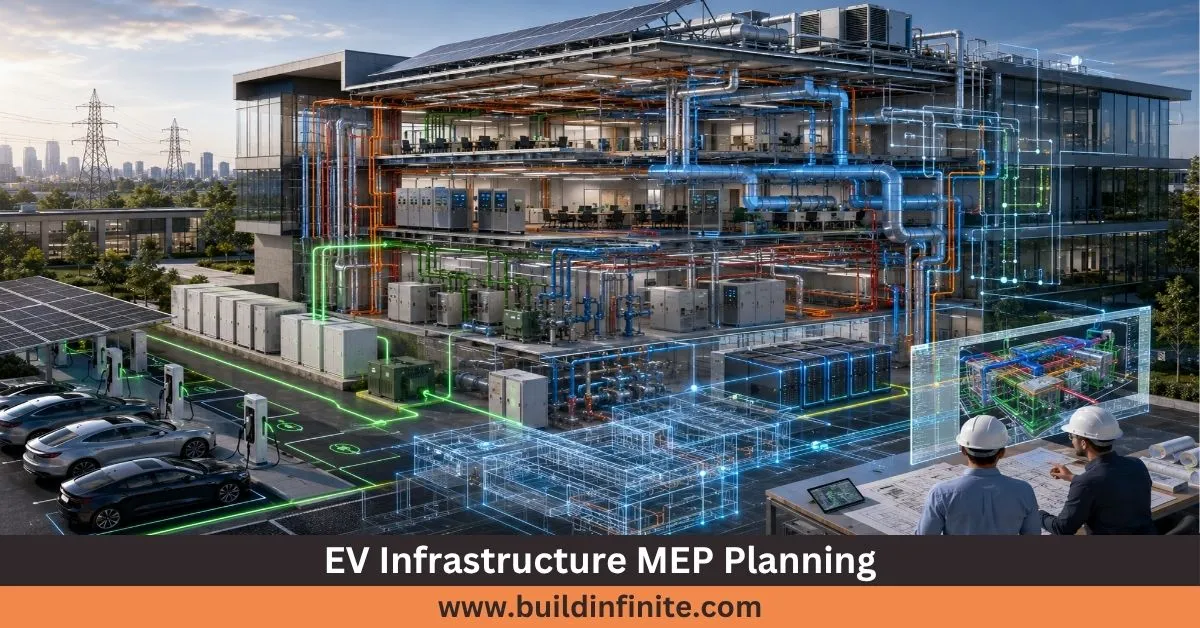
ToggleElectric vehicles are real. They are part of your day-to-day driving. The increase in electric vehicle usage in the United States is growing. Fast electric vehicle charging systems integrated into structures will be a necessity.
Increasing numbers of energy-efficient and clean residential, commercial, and mixed-use development housing will require modern electrical systems that allow maximum flexibility and options to bring new offerings to the marketplace seamlessly and easily.
Infrastructure planning and engineering bring into play a multiple systems approach and controls. This will help to provide property owners the most attractive and optimal systems available in the marketplace today that will best allow them to fulfill their goals and aspirations throughout the duration of their ownership.
Knowing what the future will hold will help to avoid the situation that will incur the most costs for the owner in the future. With the focus and growth toward clean and sustainable energy systems and their related structures, engineers will integrate EV charging systems with clean energy, battery storage, and intelligent systems of smart, automated controls.
Reliable and sustainable buildings will require advanced system and control structures. These will help to meet the goals of diverse property owners for safe, sustainable buildings that stand the test of time.
Why EV Infrastructure MEP Planning Matters More Than Ever
Building trends have resulted in the consideration of electric vehicle infrastructure at the design stage. Developers now believe that the inclusion of electric vehicle charging stations at a building is an expected design feature.
Office buildings, shopping malls, hospitals, hotels, apartment buildings, warehouses, and many other building types are placing charging stations in their building designs as one of the very first design decisions.
EV Infrastructure MEP Planning Solutions gives engineers an opportunity to address the current demand for power and incorporate heightened electrical infrastructure capacity in the design of the system. This proactive approach to engineering means that projects will avoid retrofitting heavy equipment in later phases of a project. Incorporating this engineering philosophy will minimize the overall impact of a project.
Shifting power needs are another big piece of the puzzle. Older electrical setups were never built to handle dozens of cars plugged in at once. Today, teams have to run electrical load calculations, double-check transformer sizing, and refine power distribution design before ground is broken.
Several elements influence successful planning:
- Electrical capacity planning for future charging demand
- Efficient power distribution design
- Smart load management systems
- Panel upgrades where required
- Compliance with national electrical regulations
- Flexible infrastructure for future expansion
Properties with good design today attract tenants in the future. This creates better long-term equity for owners while also meeting the infrastructure goals for sustainability.
How MEP Engineering Supports EV Charging Infrastructure
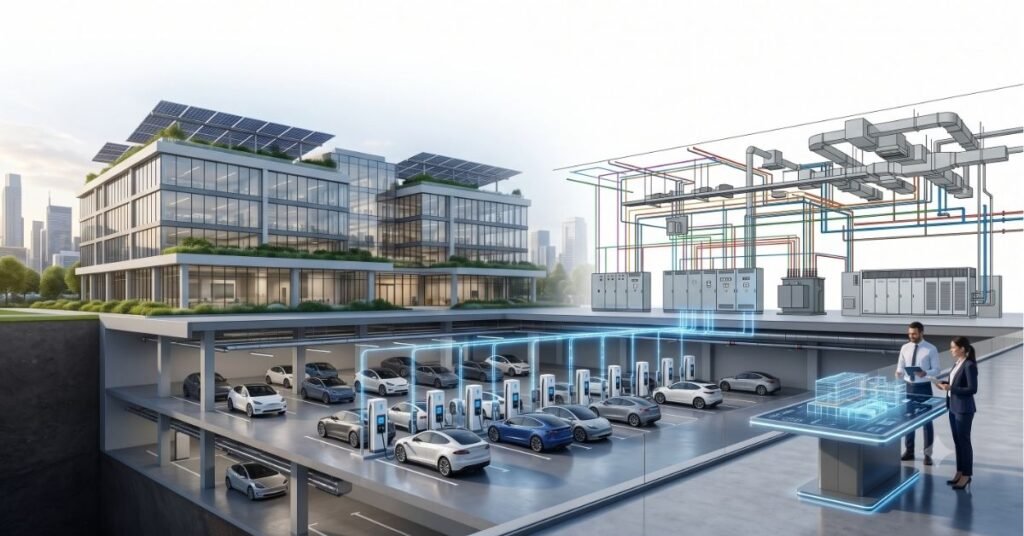
Designing MEP (Mechanical, Electrical, Plumbing) planning requires a meticulous effort by the electrical, mechanical, and plumbing teams. While the focus will be centered on the mechanical systems, each element of any MEP service plays a role in how the building is meant to operate.
First, the electrical engineers assess the electricity that the utility grid can deliver to the building site. Following, the electrical engineers perform load calculations to assess and evaluate the existing power demand of the building versus the potential power demand of future EV charging stations.
Simultaneously, the MEP design professionals develop MEP Modeling solutions by placing and incorporating EV charging stations into the building design, floor plans, and electrical layouts for parking garages. Getting the routing of the conduit right along with managing and directing the airflow, ensures accessibility, creates flexibility for routine maintenance, and helps to improve and enhance the overall operational performance of the system.
Mechanical setups need attention too. HVAC and EV infrastructure cross paths because high-powered chargers pump out heat when working. Good airflow keeps the hardware running reliably while holding temperatures in a safe zone.
Automated controls make daily utility management far easier. Modern building energy management systems track power usage moment by moment and send electricity where it is needed most. This prevents sudden power spikes while raising overall facility efficiency.
Electrical Infrastructure Planning for EV-Ready Buildings
Transforming a building into one that is EV (electric vehicle) ready goes far beyond affixing a bit of hardware to a wall. Each successful project requires a detailed and extensive design of electrical infrastructure that will accommodate the needs of the present and the demands of the future.
Designing a transformer involves many considerations. Safety is the first and foremost concern for everybody involved with a building that is EV-ready. Safety must never be sacrificed to accommodate future growth of a building. Designing and installing electrical hardware that is undersized introduces safety risks and growth constraints to a building.
EV ready building power distribution infrastructure design must consider to what extent usage habits impact the design. AV chargers (air-conditioned vehicle chargers) pull more utility power than other vehicular chargers. Consequently, engineers must design EV charger load management systems that prioritize dynamically routing available utility power.
The following table highlights key planning considerations.
| Planning Component | Purpose | Long-Term Benefit |
|---|---|---|
|
Electrical Load Calculations |
Estimate building demand |
Prevent overload |
|
Transformer Sizing |
Support future capacity |
Reduce future upgrades |
|
Panel Upgrades |
Increase distribution capability |
Improve reliability |
|
Load Management Systems |
Balance charging demand |
Lower operating costs |
|
Smart Grid Integration |
Optimize energy usag |
Better energy efficiency |
Thoughtful planning of electrical infrastructure paves the way for planning of clean power generation. Solar-and EV-charging-systems pairings reduce dependence on the grid, allowing the possibility for developers to construct outstanding, energy-efficient buildings and genuine net zero buildings.
Commercial and Residential EV Charging Demand Is Changing Building Design
High demand for commercial EV charging is sweeping across corporate parks, malls, universities, airports, and medical centers. On the residential side, residential EV charging has turned into a key feature for renters and buyers looking at condos, apartments, and modern subdivisions.
Because of this shift, architects and engineering consultants account for power infrastructure at the start of the project. Early engagement of design teams helps keep costs limited to the build and avoid work for design teams to fix oversights later on.
With the forecast for increasing building electrification, developers are under new pressure to review their energy offerings and facility layout. Rather than simply adding EV chargers to a set of previously designed projects, today’s MEP consultants integrate power systems into the very core of a new facility.
This approach facilitates better and more efficient operations while meeting the sustainable design goals of buildings and structures throughout the United States construction industry.
Preparing Building Electrical Systems for Long-Term Growth
Due to rapid EV growth, a newly commissioned site must continue to function well for up to forty years compared to maintaining today’s traffic demands. As a consequence, the implementation of modernization of infrastructure offers a strategic long-term opportunity and value as compared to the simple modernization of a typical building.
High-performing properties build in flexible electrical engineering services right from the kickoff. Detailed MEP Shop Drawings help contractors accurately coordinate conduits, equipment locations, and electrical distribution systems, reducing installation errors and future modifications. Designers set aside square footage in utility rooms, run wider conduits, and map out distribution panels that can easily handle extra load down the road.
Integrating battery energy storage systems on a site can allow the system to trim peak usage charges and can also allow the system to participate in demand response systems. If integrated with the smart grid, these tools dramatically improve the resiliency of the facility and also help to lower the monthly energy costs of the facility.
Engineers design new systems with regulatory compliance in mind. This includes meeting the latest NEC requirements for EV Charging. This also ensures that the latest NFPA standards for electrical practices are met. Compliance is achieved early, which avoids hindrances and construction delays. Building inspections and plans also continue to progress smoothly.
In addition to the above-mentioned benefits, today’s facilities integrate systems that include solar power and EV charging to utilize clean energy as efficiently as possible. This further strengthens green building practices and helps building owners to satisfì adopted constraints for net zero buildings and environmental sustainability goals.
Smart Building Systems Are Making EV Infrastructure More Efficient
Data drives better property performance. That is why EV Infrastructure MEP Planning increasingly leans on smart building systems to track power consumption live. These tools communicate directly with chargers, breaker panels, and main controls to optimize energy flow.
Automatically managing building energy systems shifts energy supply to activated EV charging stations. With the active management, the system ensures that peak demand does not ever exceed total service capacity or disrupt normal functioning of the building. It also builds confidence in the system and eliminates unnecessary energy loss.
Electrical system planning benefits from the use of digital monitoring technologies as they detect major power use patterns and trends. With this site-specific use of technology, the site manager can intentionally plan to charge during off-peak energy use windows, which would lower the site operational costs while lessening site energy consumption. The integration of the technology logs simplifies the planning of maintenance activities.
Something to think about: When considering designing energy-efficient buildings, intelligent buildings integrate smart technology to align closely with overall sustainable building design initiatives. More visibility begets better choices. Benefits of site technology embedded logs enable site maintenance activity planning integration.
Renewable Energy Integration Is Reshaping EV Infrastructure MEP Planning
Integrating onsite clean power generation is transforming property operations. As a result, EV Infrastructure MEP Planning involves more than just basic wiring plans. Many projects are integrating EV charging infrastructure combined with solar and EV charging systems to curb reliance on the main grid.
The integration of battery energy storage systems increases energy resiliency throughout the site. Stored power is used to charge electric vehicles (EV) during peak demand hours to avoid high utility surcharges. In addition, demand response systems allow the site to adjust consumption based on the live conditions of the electric grid.
Combining smart grid integration with data exchange between buildings and power companies allows the automation of EV charging, thereby improving stability of the local grid and promoting cleantech infrastructure.
Reliable guidance from the U.S. Department of Energy’s Electric Vehicles Program highlights best practices for EV charging infrastructure, clean transportation, and energy-efficient building planning.
Price decreases for green technology give developers more incentive to design and incorporate sustainable infrastructure into their initial build-outs as opposed to engaging in costly, future retrofits. Immediate utility cost savings is an added benefit along with the improvement in eco performance over time.
Challenges Facing EV Infrastructure MEP Planning Across the United States
Even with all of the possible opportunities, more than a few remaining concerns are still present. Utility rules vary wildly, and the rapid differences can lead to very different building codes. That is why MEP engineering consultants study localized utility services before finalizing comprehensive MEP design plans.
Planning for electrical needs can be complicated and time-consuming, especially as demands for power increase around the world. The underserviced needs for industrial-scale development can often mean the need for additional negotiated upgrades to the current utility and power infrastructure long before construction can begin.
Navigating the best possible outcomes by balancing short-term goals for an immediate return of construction cost against an anticipated long-term projected growth in demand is always a tricky and difficult calculation. Installing oversized hardware would lead to a significant increase in construction costs, but under-specifying hardware leads to even greater and more painful unplanned and unexpected future costs. Knowing this valuable information, well-balanced MEP consulting delivers huge value.
Being up to date and on top of the electrical code is important and necessary. All jobs are required by code to meet the electric vehicle (EV) charging requirements of the National Electric Code (NEC), along with the other electrical standards of the National Fire Protection Association (NFPA) and the local city regulations. Clarity and precision in design eliminate bottlenecks and delays in permit processing. Timely and efficient inspections.
Rapid hardware upgrades mean plans must stay flexible. Because charger technology evolves so quickly, having versatile electrical infrastructure planning is vital for long-term project viability.
The Future of EV Infrastructure MEP Planning in the US Construction Industry
MEP planning for EV infrastructure designs will follow the disruptions of the future in transport, energy, and construction. New construction projects classify EV infrastructure as a core base design feature, not a supplemental add-on.
Current commercial construction project planning anticipates potential future power upgrades during the initial project schematic reviews. The construction industry is well aware that buildings that are EV infrastructure ready attract high-value tenants, raise resale value, and improve long-term value.
The use of artificial intelligence (AI), predictive analytics, and real-time cloud data tracking will automate and improve building infrastructure systems to new levels. Tools such as these will automate charging, identify maintenance needs, and equalize the power demands across the property.
The modernization of wider infrastructure systems will continue to drive the building electrification movement across the United States. Connecting with clean power, battery, and smart system controls will soon be standard practice in commercial building mechanical, electrical, and plumbing (MEP) engineering.
As the rate of EV adoption in the US increases, MEP engineering will play a major role in the construction of durable facilities with low energy use that are suited for the mobility needs of the future.
Conclusion
The growth of interest in electric transportation is altering the design of structures. Presently, the planning of MEP for EV Infrastructure is in the center of most construction projects in the United States. Dependable power lines along with charging equipment that may be expanded to meet demand, along with lower utility costs, have all been achieved while expensive retrofits have been avoided.
Premium developments require the highest level of MEP engineering along with smart building systems integrated with power systems and local building code rules and regulations. This elevated level of thinking ensures that properties remain efficient, flexible and multi-functional for decades.
Developers remodeling existing sites or building new ones should call in professional MEP services and specialize in electrical engineering services when their project first starts. Bringing in specialists of this level at the start of a project helps keep construction costs low, programs simple to expand, and meet sustainability targets.
Ready to prepare buildings for the next generation of electric mobility? Contact us today to discuss customized EV Infrastructure MEP Planning solutions. Request a quote today and build smarter, more efficient, and future-ready facilities with confidence.
Frequently Asked Questions
Why are EV-ready buildings becoming important in the United States?
The incorporation of EV-ready building systems addresses the evolving needs of drivers while eliminating the need for significant retrofits in the future. EV-ready building systems increase site value, attract high quality tenants, simplify the installation of EV charging systems, and position buildings to respond to the increasing demand for EV charging systems in the U.S.
How does MEP engineering support EV charging infrastructure?
Within the context of this planning approach, a MEP Engineering function integrates Electrical Panels, Cooling Systems, Power Distribution, and building layout systems for EV charging infrastructure. This function integrates the disciplines of Engineering, Architecture, and Construction, and elevates safety practices, design construction, and integration of energy and power systems for building complexes and campus systems.
What should be considered before installing commercial EV charging stations?
When designing EV charging infrastructure, teams must consider evaluation of electrical load assessments, transformer sizing, upgrading electrical panels, integration of EV charging systems to grid supply systems, design of parking garages, integration of EV charging systems in compliance with the requirements of the National Electrical Code (NEC), and future flexible pathways. This early planning reduces the costs associated with the integration of EV charging systems, and positions building systems to respond to the ever changing needs for the integration of EV charging systems.
Can renewable energy improve EV charging infrastructure?
Yes. Solar and EV charging integration systems an energy storage battery system, smart grid integration, and a demand response system, position building systems to meet lifesaving solar energy storage systems, and respond to changing energy demands in the building environment over the long term.