Table of Contents
ToggleWhen we think about construction, most people imagine tall buildings, strong concrete walls, shiny glass windows, or stunning facades.
But what makes a building truly usable and comfortable is what happens inside the walls – the systems that control air, water, electricity, and safety. This is where MEP Design and Drafting for Construction becomes essential.
MEP stands for Mechanical, Electrical, and Plumbing – the three pillars that bring life to a building. Without MEP systems, even the most beautiful structure is just a lifeless box. Imagine a building with no proper lighting, no running water, or no air-conditioning. It wouldn’t be functional, right? That’s exactly why MEP is often called the heart of modern construction.
In this blog post, we’ll explore the critical role of MEP Design and Drafting in construction, examining its impact on comfort, cost, safety, and sustainability, and why it’s essential for every successful project.
What is MEP Design and Drafting
Before we explore its importance, let’s first understand what MEP design actually means.
- Mechanical (M): Involves heating, ventilation, and air conditioning (HVAC). These systems ensure temperature control, fresh air, and smoke control in emergencies.
- Electrical (E): Manages power supply, lighting, wiring, backup generators, fire alarms, and low-voltage systems like Wi-Fi or CCTV.
- Plumbing (P): Ensures a clean water supply, wastewater removal, sewage treatment, and sometimes even rainwater harvesting.
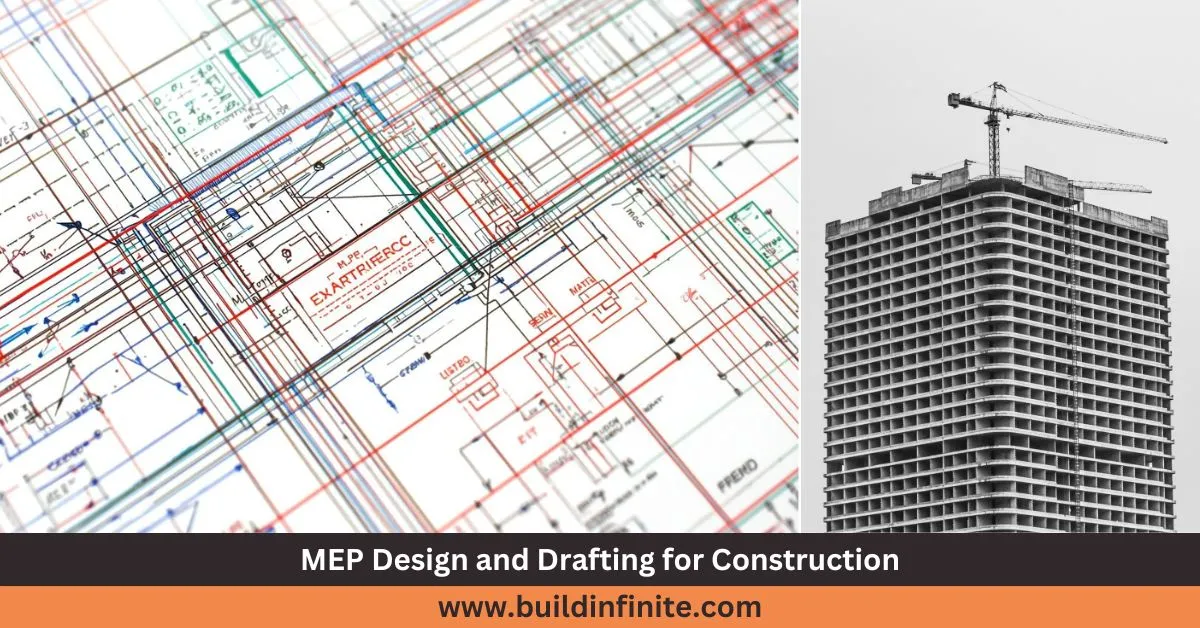
Now, drafting means creating detailed 2D or 3D drawings that accurately represent how these systems will be installed. These drafts act as a guide for contractors and ensure there is no confusion on-site.
Together, MEP Design and Drafting for Construction ensure every component of the building is functional, safe, and coordinated with architectural and structural plans. Without it, there would be endless mistakes, clashes, and delays.
Why is MEP Design and Drafting Essential for Construction
1. Ensures Comfort and Safety
People expect buildings to be comfortable, whether it’s their home, office, or a shopping mall. Proper MEP Design and Drafting for Construction guarantees this comfort by providing controlled air circulation, heating and cooling, adequate lighting, and reliable plumbing.
For example, in hot climates, HVAC design ensures indoor spaces stay cool, while in cold regions, it provides heating. Safety is another critical factor. Poorly designed electrical systems can cause short circuits or even fires.
Similarly, plumbing leaks can damage the building and cause health hazards. MEP systems ensure fire alarms, sprinklers, and smoke detectors are in place, protecting both lives and property.
2. Saves Time and Cost
Without proper MEP drafting, different systems may clash. For instance, a plumbing pipe may run across an electrical conduit, creating safety risks.
Fixing such issues after construction is expensive and time-consuming. Detailed MEP designs prevent these problems by resolving conflicts on paper before construction begins.
With MEP Design and Drafting for Construction, project owners can:
- Avoid unnecessary rework and material wastage.
- Streamline construction schedules.
- Reduce workforce hours and equipment idle time.
This means projects are completed faster and within budget.
3. Improves Energy Efficiency
Energy consumption is one of the biggest concerns in modern construction. MEP systems can either waste energy or save it, depending on how well they are designed.
Efficient HVAC systems, LED lighting, and smart water systems reduce operational costs for years to come.
Proper MEP Design and Drafting for Construction also allows integration of renewable energy solutions like solar panels and geothermal heating.
By designing energy-efficient systems from the start, buildings consume less electricity and water, making them eco-friendly and cost-effective in the long run.
4. Ensures Compliance with Codes and Standards
Every country has specific building codes that must be followed for safety and efficiency. These include fire codes, electrical load regulations, plumbing safety standards, and ventilation rules. MEP engineers ensure that designs follow these legal requirements.
Non-compliance can result in penalties, failed inspections, or even demolition orders. By investing in professional MEP Design and Drafting for Construction, builders stay on the right side of the law and avoid costly legal troubles.
5. Improves Collaboration and Coordination
A construction project involves architects, structural engineers, contractors, and MEP engineers working together. Without clear drafting, there will always be confusion.
For Example, an architect may design a ceiling height without realizing that HVAC ducts won’t fit.
Drafting allows everyone to visualize the systems in advance. It acts as a communication tool, ensuring smooth collaboration. This reduces disputes, saves time, and creates a well-coordinated project.
Components of MEP Design and Drafting
1. Mechanical Systems (HVAC)
Mechanical systems control air quality, temperature, and ventilation. In large buildings like hospitals or shopping malls, HVAC systems maintain comfort for thousands of people.
Drafting ensures ducts, vents, and machines fit within the design without affecting aesthetics. Proper smoke extraction systems are also vital during emergencies.
2. Electrical Systems
Electricity is the backbone of modern life. From powering lights to running elevators, everything depends on electrical systems.
Drafting makes sure electrical wiring, switchboards, and backup generators are installed safely. Fire alarms and emergency lighting systems are also part of electrical design, which saves lives in crises.
3. Plumbing Systems
Plumbing ensures clean water reaches every tap while wastewater is safely removed. It also covers gas piping, rainwater harvesting, and sustainable solutions like greywater recycling.
Drafting avoids pipe clashes, ensures proper slope for drainage, and makes maintenance easier later.
Together, these systems form the backbone of MEP Design and Drafting for Construction. Without proper planning, buildings would face endless issues like leaks, power failures, and poor air quality.
Benefits of MEP Design and Drafting for Construction
1. Accurate Planning with 2D and 3D Models
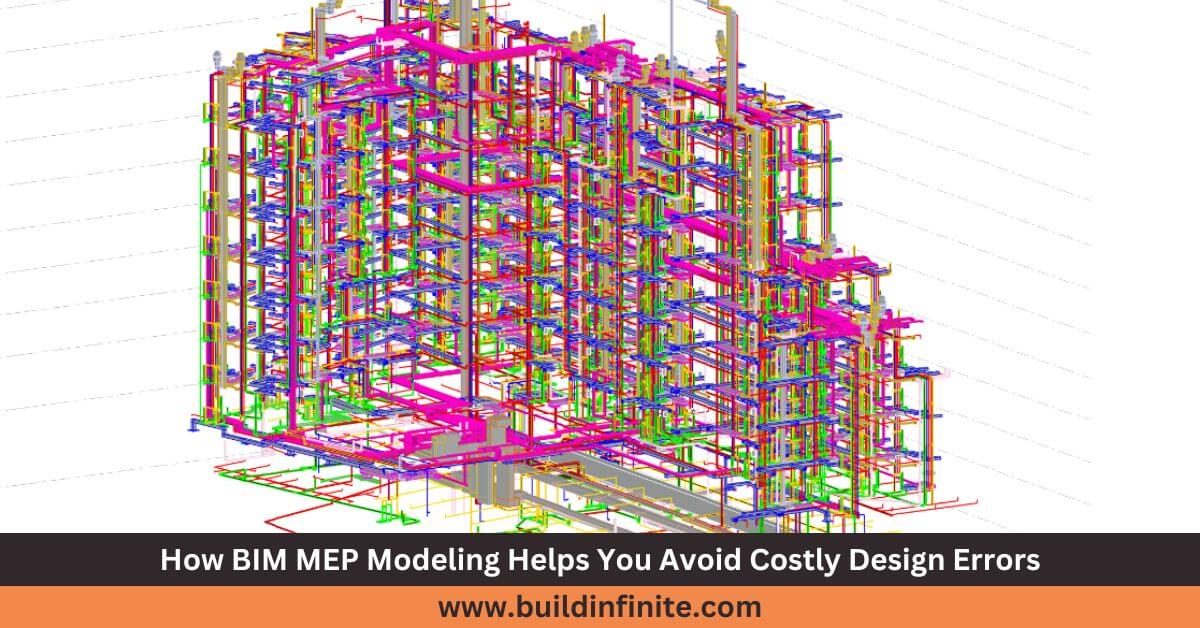
Modern software like AutoCAD, Revit, and Navisworks allows engineers to create precise MEP models. These aren’t just drawings – they are simulations that show how the systems will work. This helps owners visualize the outcome and ensures the design matches expectations.
2. Early Detection of Clashes
Clash detection is one of the biggest advantages of MEP design. If a plumbing pipe intersects with a duct, the software highlights it before construction begins. Fixing a clash in the design stage costs almost nothing compared to fixing it on-site.
3. Smooth Construction Workflow
Contractors and workers rely on MEP drawings to know exactly where to place pipes, wires, and ducts. This eliminates confusion and prevents rework. With accurate drafts, the workflow becomes faster, smoother, and more efficient.
4. Long-Term Maintenance Benefits
Buildings require regular maintenance, and MEP drawings serve as a guide for future repairs.
When there is a water leak or power failure, maintenance teams can quickly locate the problem because everything is documented in the design. This saves time, money, and frustration.
The Role of BIM in MEP Design and Drafting
One of the most transformative innovations in construction is Building Information Modeling (BIM). Unlike traditional 2D drafting, BIM creates a 3D digital representation of the entire building, including MEP systems.
Benefits of BIM in MEP Design and Drafting for Construction include:
- Better visualization for clients and teams.
- Automated clash detection.
- Accurate material quantity estimation.
- Faster approval from authorities.
- Easy integration with facility management systems.
BIM also allows simulation of how systems will perform under different conditions. For example, HVAC performance can be tested for summer and winter before installation. This reduces risks and ensures better results.
Real-Life Examples of MEP Importance
- Airports: Airports require extensive HVAC systems, advanced fire safety measures, and reliable power backup. Without MEP, operations would collapse.
- Hospitals: Critical facilities like ICUs and operating rooms require sterile air, uninterrupted electricity, and reliable plumbing. Any failure here can cost lives.
- Skyscrapers: Tall buildings depend on advanced plumbing to move water to high floors and ventilation systems to keep air fresh.
These examples show that MEP Design and Drafting for Construction is not optional—it’s mandatory for modern infrastructure.